Lyon, France was known as a major center for silk production, with 1/3 of the population working in the silk industry. Each of these beautiful woven peices would require two weavers, one who operated the loom and one who adjusted teh threads according to complex patterns. The proccess of manual weaving was extremely slow, taking an entire day to produce just one inch of fabric.
The pre-Jacquard weaving process was analog because it relied on continuous, manual adjustments of the threads. each threat was individually moved up or down to create a pattern by hand.
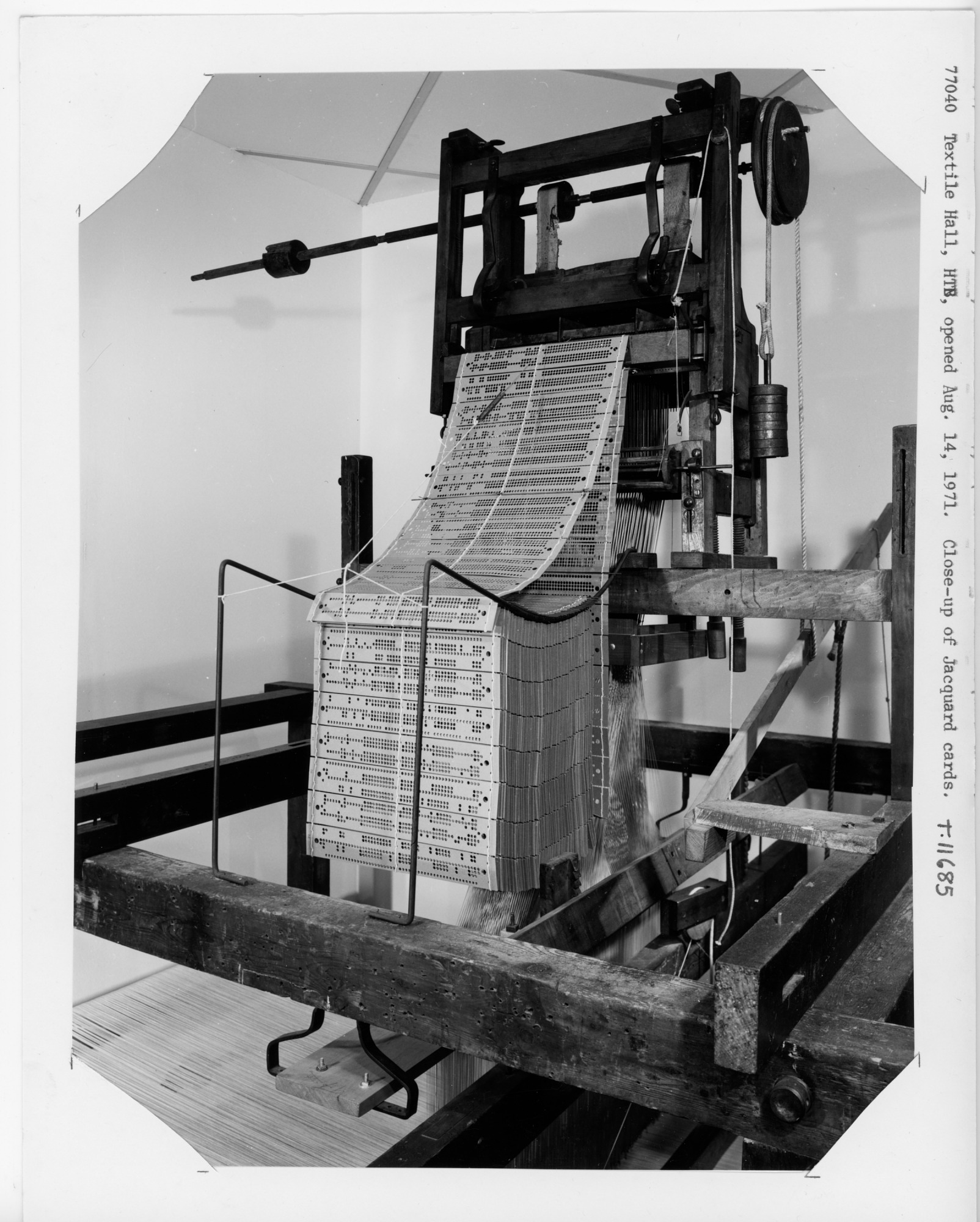
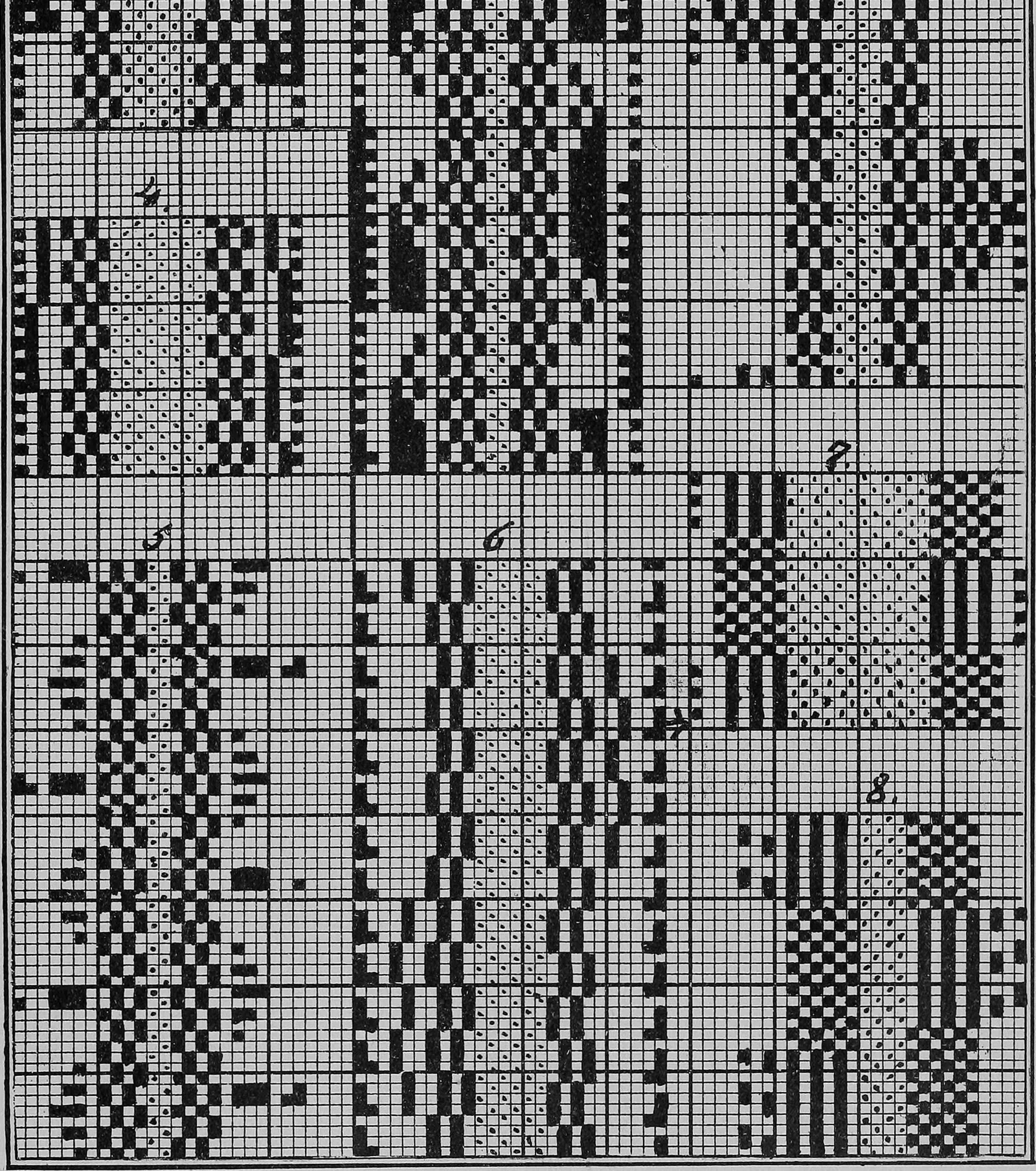
In 1804, Joseph Jacquard created the a loom that was automated and made the process of weaving large pieces just a few months. Instead of having two workers, the Jacquard loom only needed one individual and a set of punch cards. In class, we learned that these punch cards work a lot like binary code, with each hole in the card representing a specific instruction. In this case, the instruction told the loom operator whether to lift a particular thread or leave it down. The Jacquard loom was digital because the presence or absence of a hole in one of the punch cards meant that the loom had a limited set of choices (up or down).
In class, we learned that loom represents much more than just fancy fabrics or patterns, but rather, the system gets at the essence of abstracting information. In this case, the loom’s punch cards meant that information was being taken from elsewhere and encoded in a different form. This means that simple symbols, like holes, can be used to describe anything in the universe as long as you have enough of it.